
By Rafael Vesey May 18, 2026
Every merchant knows the frustration: a customer is ready to buy, cart loaded, credit card in hand — and then the transaction fails. The sale evaporates. The customer leaves. And in most cases, nobody fully understands why it happened. Credit card declines are one of the most quietly damaging problems in retail and e-commerce, costing businesses billions in lost revenue each year. Understanding the real causes behind payment authorization failures — and knowing how to reduce them — is no longer optional for merchants who want to compete.
Why Credit Card Declines Are a Bigger Problem Than They Appear

A single declined transaction feels like a minor inconvenience. At scale, it becomes a serious revenue leak. Studies from Javelin Strategy & Research suggest that false declines — transactions that are blocked even though the customer is legitimate — cost US merchants over $157 billion annually, far exceeding actual fraud losses.
Every merchant should be alarmed by that statistic. The challenge is more than just fraud prevention. There is a fractured system connecting banks, payment networks, and merchants that harms customers and compromises brand trust. When a customer’s transaction is denied, and they leave the website, they are unlikely to return, and may even be unlikely to purchase anything from that merchant in the future.
The Most Common Causes of Credit Card Declines
Understanding why declines happen is the first step toward fixing them. Payment authorization failures don’t come from a single source. They happen for a wide range of reasons, some within the merchant’s control and some not.
Insufficient Funds or Credit Limit Issues
The simplest explanation for a decline is that the customer has exhausted available credit or cash. This is particularly true at the end of the billing cycle or in households that run close to the limit of a tight budget. Although merchants cannot change their customers’ finances, they can mitigate this by offering multiple payment options at checkout.
Incorrect Card Information
Mistyped card numbers, wrong expiration dates, and incorrect billing addresses are surprisingly common — especially on mobile devices with small keyboards. Even a single incorrect digit will trigger an authorization failure. This type of decline is entirely preventable with better checkout design and real-time input validation.
Suspicious or Unusual Activity Flags
Banks deploy advanced algorithms to identify atypical spending behaviors. Card-issuing banks may reject transactions if the transactional spending is inconsistent with former spending or if there is an unusual number of transactions to an atypical or new merchant. This is entirely reasonable for fraud prevention. However, it often inconveniences actual customers.
Card Expired or Not Activated
Customers often forget to activate new cards or continue using cards past their expiration date. These declined transaction causes are easy to overlook from the cardholder’s side, but result in immediate payment authorization failures on the merchant’s end.
AVS and CVV Mismatches
Checks that use Address Verification Services compare the address entered on an order with the customer’s address stored by their financial institution. An order may be declined due to a mismatch in address, even if there is a slight difference in the abbreviation of a road or street name. CVV mismatches can be equally problematic for merchants. Merchants who require a strict AVS match may not realize that their AVS preference can actually deny real customers.
Soft Declines vs. Hard Declines
Not all declines are created equal. A soft decline is temporary — it might indicate a network timeout, a daily spending limit temporarily exceeded, or a processing issue. These transactions can often be retried successfully. A hard decline, on the other hand, is final. It signals that the bank has firmly rejected the transaction, usually due to fraud flags, account closure, or the card being reported stolen. Understanding the difference is essential for merchant checkout optimization because retrying a hard decline wastes time and may further flag the account.
How the Payment Authorization Process Actually Works

To fix credit card declines, merchants need to understand what’s happening behind the scenes. When a customer swipes, taps, or enters their card information, the authorization request travels through a chain: from the merchant’s payment processor to the card network (Visa, Mastercard, American Express) and then to the card-issuing bank. Each step in this chain is a potential point of failure.
The entire process happens in seconds, but it depends on clean data, network reliability, and the issuing bank’s real-time risk assessment. If anything goes wrong at any point, the transaction fails. The merchant sees a decline in code. The customer sees “payment not accepted.” Neither party typically understands what specifically went wrong.
Standard decline messages are often vague and don’t help customers resolve the problem. Most of the time, merchants don’t get adequate information to take action. One of the more comprehensive references on decline codes is Stripe’s documentation. It is a good resource for payment-related technical teams.
What Merchants Can Do to Reduce Payment Authorization Failures
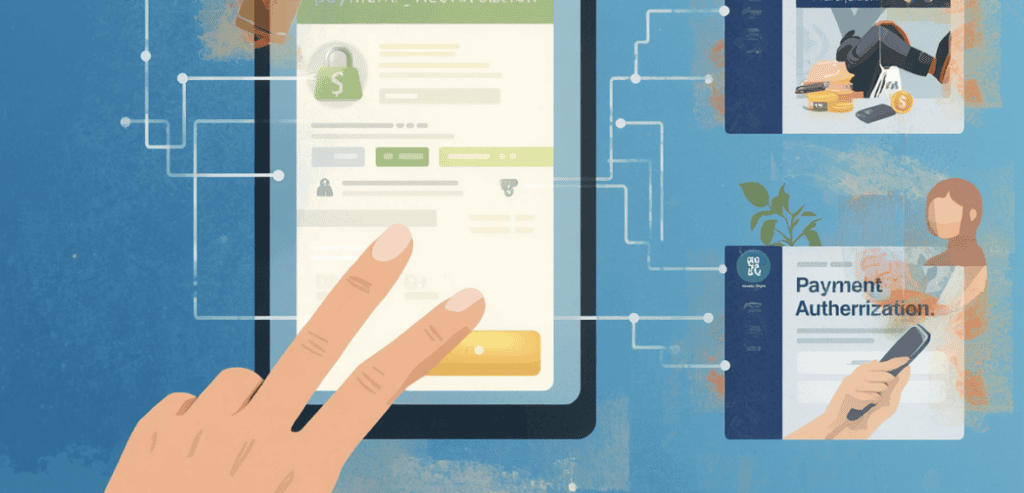
Merchants aren’t powerless here. There are concrete, proven strategies for reducing credit card declines and recovering revenue that would otherwise be lost.
Optimize the Checkout Experience
Poor checkout design directly contributes to declining transaction causes. Forms that are difficult to fill out on mobile, fields that don’t auto-format card numbers, and unclear error messages all increase the chance of incorrect data entry. Streamlining the checkout flow reduces human error and improves authorization rates. Real-time field validation — the kind that flags a card number as incorrect before the customer submits — is a relatively simple yet meaningful fix.
Use Account Updater Services
Visa and Mastercard
Visa and Mastercard both have automatic account updating programs. When a customer is issued a new card, Visa and Mastercard automatically notify subscribed merchants with updated credit card information. For companies with a subscription-based service or a recurring billing system, the automatic account updater feature is one of the most useful tools. Without this feature, every customer with an expired card could be counted as a loss of business or ‘churn’ even if that is not actually the case.
Offer Multiple Payment Options
The simplest way to recover a declined transaction is to offer the customer an immediate alternative. Digital wallets like Apple Pay, Google Pay, and PayPal offer tokenized, pre-verified payment credentials that tend to have lower decline rates than manually entered card details. Buy Now Pay Later options and ACH bank transfers can also capture sales that credit card processing would otherwise lose.
Work With Your Payment Processor on Retry Logic
Stripe, Adyen, and Braintree
Current payment processing solutions with intelligent retry logic, such as Stripe, Adyen, and Braintree, achieve high recovery rates for soft declines by scheduling retries at optimal times. An example of Braintree’s improvement through intelligent logic is the Smart Retries feature that uses machine learning to analyze soft decline patterns and determine which retry attempts are most likely to succeed. For merchants with a subscription, intelligent retry is a necessity. Manual attempts to remedy subscription soft declines can worsen outcomes. Adyen developed a guide explaining how suboptimal manual retries negatively impact recovery rates and how better retry logic can improve results.
Review Your Fraud Rules Carefully
Overly aggressive fraud filters are a leading cause of false declines. If your fraud prevention settings are calibrated too tightly, you’re likely blocking legitimate customers along with fraudulent ones. Review your decline rate data by customer segment, geography, and device type. If you see elevated decline rates among customers who exhibit no other fraud signals, your rules may need adjustment. The goal is precision — blocking bad actors without penalizing real buyers.
Communicate Clearly With Customers
When a decline does happen, how you communicate matters. Vague messages like “payment failed” leave customers confused and frustrated. A clear message that tells the customer what to try next — check your billing address, try a different card, contact your bank — dramatically improves the chance of recovering the sale on the spot. Customers who understand what happened are far more likely to try again than those who simply see an error and give up.
The Merchant Checkout Optimization Mindset
Those merchants who continually obtain higher authorization rates know that processing payments is a customer experience function, not a back-office function. Every friction point encountered in checkout, each vague or unhelpful error message, and every superfluous form field is a reason for a transaction to be declined. Reducing credit card declines is an exercise in customer experience and requires the same care and concern as any other conversion optimization effort.
Regularly auditing decline data, working closely with your payment processor, and testing checkout improvements with real customers are the habits that set high-performing merchants apart. This isn’t a one-time fix. It’s an ongoing discipline.
Conclusion
Credit card declines at checkout are not just a technical nuisance — they represent real revenue walking out the door. From payment authorization failures caused by expired cards and AVS mismatches, to false declines triggered by overzealous fraud detection, the causes are varied and often fixable. Merchants who invest in understanding why these failures happen — and who take deliberate steps toward merchant checkout optimization — will see measurable improvements in conversion rates, customer satisfaction, and bottom-line revenue. The checkout experience is the last mile of every sale. It deserves the same strategic focus you give everything else.
Frequently Asked Questions
What is the most common reason for a credit card decline?
Insufficient funds and incorrect card information are the most frequent causes. However, bank-side fraud flags — where a legitimate transaction is blocked due to unusual activity patterns — are increasingly common and often go unrecognized as the source of the problem.
What is the difference between a soft decline and a hard decline?
A soft decline is temporary and often retryable. It may indicate a network issue, a daily spending limit, or a bank-side processing delay. A hard decline is permanent and means the bank has firmly refused the transaction. Retrying a hard decline is unlikely to succeed and may signal fraud risk to the card network.
Can merchants see why a credit card was declined?
Merchants receive decline codes from their payment processor, but these codes are often vague. Some processors, like Stripe, publish detailed explanations of their decline codes. In many cases, the cardholder must contact their bank directly to get a full explanation, since the issuing bank holds the most specific information.
How can merchants reduce false declines without increasing fraud risk?
The key is precision calibration. Work with your fraud prevention provider to analyze decline patterns by customer segment. Use velocity checks and behavioral signals rather than blunt rules like blanket geographic blocks. Machine learning-based fraud tools tend to balance these tradeoffs more effectively than static rule sets.